
Trump is threatening trans-affirming school districts. Student activists are fighting back.
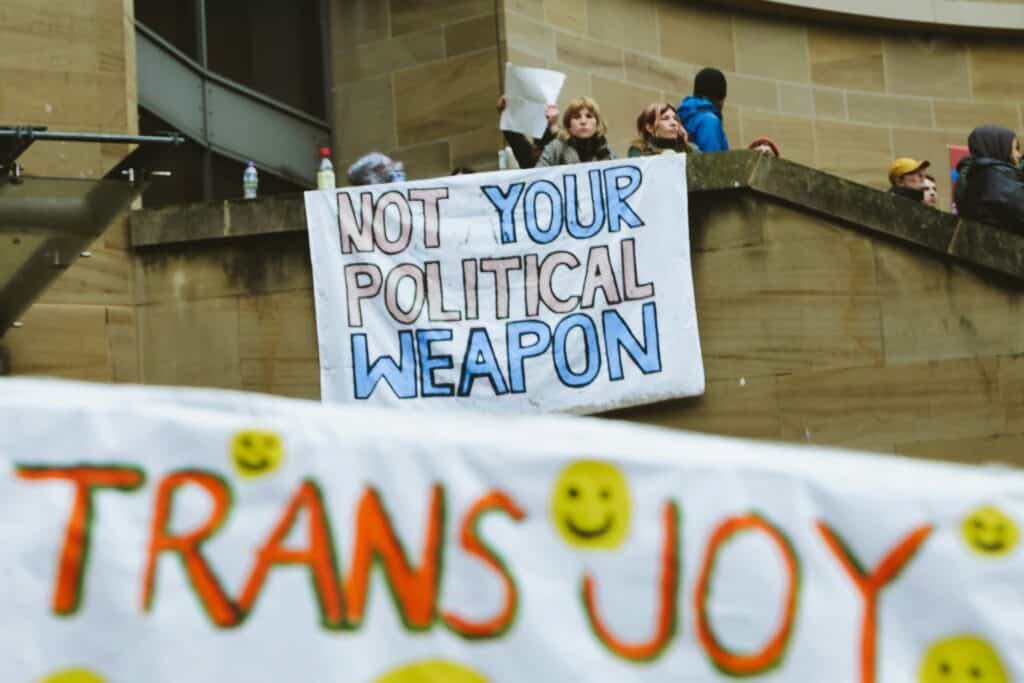
Thiago Rocha, Unsplash
The Trump administration is taking legal action against school districts in multiple states for upholding trans-affirming policies.
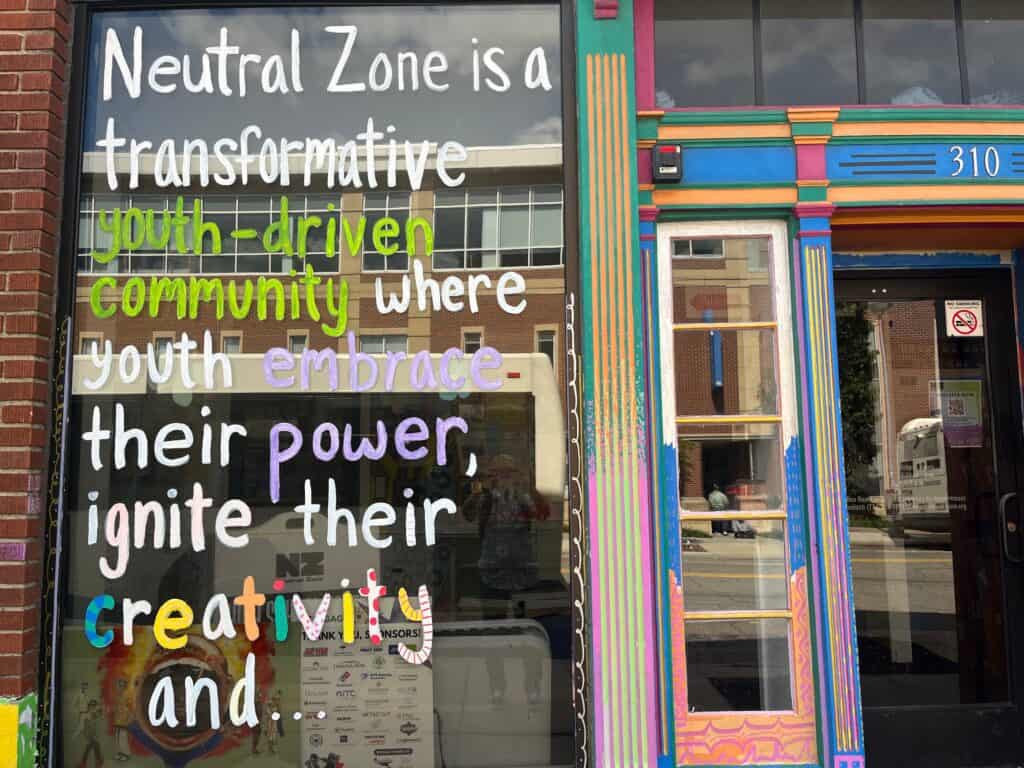
The Neutral Zone Teen Center in downtown Ann Arbor, Michigan is bustling on a Friday afternoon in September. Dozens of teenagers mill around a cavernous room with pool tables, a stage, an open kitchen with snacks, and a row of recording studios and private spaces. It’s the first meeting of the year for Riot Youth, a queer teen activism group that has held weekly meetings at the center for over 25 years.
Riot Youth (a group I co-founded in 1999-2000), which first got the Ann Arbor school district to enforce anti-discrimination rules for LGBTQ students in 2008, has a notable history when it comes to youth organizing. In 2018, the group advocated successfully for an expanded trans student policy that would require teachers to respect students’ gender identification and protect their privacy. This policy helped create a safer school environment, where trans students could trust their teachers with information about names, pronouns, and gender identity — and trust that teachers could not disclose this private information on demand.
This fall, the work of Riot Youth continues under a regressive series of attacks on transgender youth. Nationally, the Trump administration and Republicans are going after queer- and trans-friendly policies and protections that queer activist groups like this one have worked to implement over many years. Over the summer, the Trump administration brought its attacks on trans kids to Ann Arbor’s doorstep.
The Department of Education (DOE), in a July 27 press release, accused both Ann Arbor Public Schools in Michigan and Anne Arundel Public Schools in Maryland of “hiding sensitive information about children’s health and wellbeing from their own parents,” alleging that the district’s student privacy policies violate the Family Educational Rights and Privacy Act (FERPA). Letters sent to the two districts threatened to withhold federal funds if they did not promptly revise their policies regarding trans youth, which were worded specifically to protect the privacy of trans teens who disclose their names or pronouns to teachers or administrators. The press release referred to this protection as “secretly transitioning” students.
During a regular Board of Education meeting on August 26, Ann Arbor’s elected school board took a gamble and decided to revise the policy, but just slightly, to see if it would be enough to get the feds off their back. Anne Arundel in Maryland also amended its policy. Jay Sloan, Neutral Zone’s adult advisor to Riot Youth, sardonically called the district’s move “interesting.”
“It’s very intriguing,” Sloan said slyly. But more seriously: “We’re seeing a lot, globally, of people who historically have shown up as allies, really backtracking. And that’s a really scary thing. There was a time where it was profitable to be an ally, and now that that time is no longer here, which is when it really counts. Now you have less to gain and more to lose. That’s when allyship is really important.”
Students and their allies criticize “compliance in advance”
M.L., a junior at an Ann Arbor high school who spoke to TransLash on condition of anonymity, discovered that the school board was voting to change its policy protecting trans student privacy while its August 26 meeting was already underway. The vote to change the policy had been added to the meeting agenda earlier that same day — a process that normally requires at least two weeks’ notice to the public. As the board amended its policy on trans and gender-nonconforming students in an attempt to appease the Trump administration, there was no opportunity for public comment.
The board changed the language of the policy’s first paragraph to state that, while school staff should attempt to maintain student confidentiality, “When disclosure is legally required, the school should, where practicable, provide the student an opportunity and appropriate support to make the disclosure.” Clearly attempting to address DOE concerns, they wrote: “Nothing in this paragraph restricts a parent or eligible student’s right to inspect and review education records under FERPA or requires student consent when the parent holds that right.”
M.L. said he and other trans students were angry, but not surprised.
“I was really upset about how it happened. They didn’t do it in a way that let anyone feel heard or valued or brought anyone on their side at all. I could see a world in which they say, ‘we know we need to comply in some way. But it is still worth it to us to engage our community,’” he said. “They changed language that they can’t go back on.”
At its next regular meeting two weeks later, the Board of Education assured students that teachers would be trained on the new policy, and that nothing would change in effect; trans students could still confide in their teachers with information about their gender identity, and nothing in the policy mandated that teachers call home or reveal that information on demand.
“It felt like such a slap in the face, because I am a trans student and I have been outright discriminated against and harassed by teachers,” said M.L. The only way to ensure trans student protection from the possibility of being outed is a strong policy, which has now been weakened, he said. “This change paves the road toward teachers being compelled to out students.”
These policies matter because, at least in theory, they create an environment in which a student who is exploring questions of gender identity can confide in adults at school without the fear of being outed to a potentially hostile parent. Trans kids can face verbal and physical abuse, houselessness, and forced gender conversion therapy, among other risks.
“The kids actually put at risk by this policy can’t speak about it themselves,” M.L. explained. “This currently mainly affects kids who would be in an unsafe situation if they were out as trans to their families. As a result, they cannot speak on the potential harm of being outed to their families.”
Some have argued that, because of Ann Arbor’s overall progressive environment, it’s unlikely that a student would get outed by a teacher. M.L. says that goes against his experience: “No place is 100% safe.”
It’s notable that calls to reduce trans protections, in Ann Arbor and many other communities under attack by the administration, are not coming from inside these districts. Both local advocates and school board members in Ann Arbor told TransLash that the complaints around trans youth — whether it’s their role in sports, or their privacy rights at school — have come not from local parents, but from outsiders. Parental complaints inside the district about trans- and queer-affirming policies are virtually nonexistent. In places like Anne Arundel County, where there are parents actually complaining, they are generally backed by conservative legal groups.
But in these localities, many parents and educators are vocally supportive of trans people. In Ann Arbor, dozens showed up in protest after the abrupt policy change. At the September 9 Board of Education meeting, parent Kami Michels, who has a transgender child in an Ann Arbor school, spoke to the board with a shaky voice: “My child’s gender identity is not gossip; it’s not something that should be casually shared from one adult to another. For some transgender kids, being outed isn’t simply uncomfortable or embarrassing — it can mean rejection, it can mean losing family member support, it can mean emotional or physical danger. For some kids, being outed can be life-threatening.”
Emma Kenney, a transgender former student of Skyline High, a public school in Ann Arbor, said she was dismayed to hear that the board decided to change the policy without consulting transgender students or their families. The original policy passed in 2018, Kenney argued, was crafted by experts who carefully considered how to protect trans students while complying with federal law.
“I believe that you all have good intentions,” she said at the meeting. “Nevertheless, the changes made that night expose trans kids to forced outing by any school personnel that choose to do so.”
Evan Murphy, a former student in the district, attested that he had been a part of the original activism that led to these policies. “10 years ago, my classmates and I were part of a movement to encourage this body to adopt protections for LGBTQ youth,” he said. “To say I am disappointed to be standing here under similar pretenses today is an understatement. You will never be able to come to the table and meet in the middle with people who simply do not want trans people to exist.”
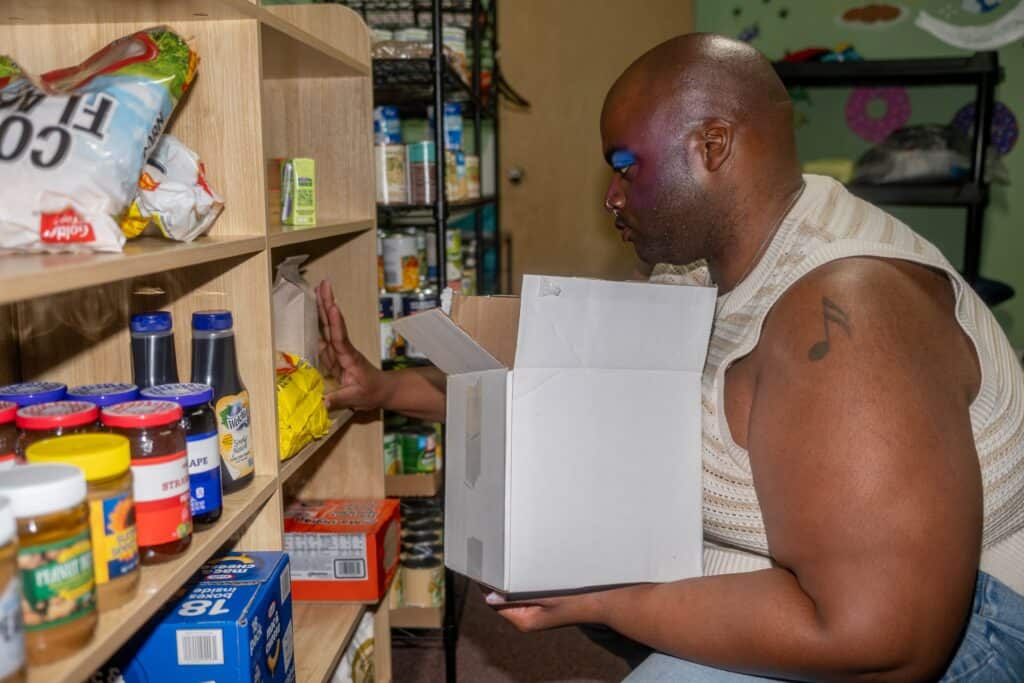
At Neutral Zone, staff also defended trans students: “Young people need to authentically be able to experience their gender,” said Neutral Zone’s executive director, Lori Roddy. “I think districts should be supporting young people, period.”
The district’s decision to swiftly accommodate Trump did not go over well with its constituents, and the district’s attempt to appease the Trump administration did not work. Five days after the September 9 public meeting, the Trump administration retaliated with a new letter, and the case went from being a Department of Education threat to a legal threat from the Department of Justice (DOJ) Civil Rights Division. The DOJ had perceived, correctly, that the district had attempted to change the policy without changing the practice. The letter quoted statements made by school board members including board president Torchio Feaster and member Susan Schmidt to make its point. It appears the Trump administration had been watching the local school board meetings.
That letter gave the school board 14 days to fully rescind its policy or risk litigation. Board President Feaster said in an interview with TransLash that the board is disappointed with the outcome. The previous revisions to the policy, he said, were an attempt to give the government reassurance without changing the practice and spirit of protecting trans kids. “We believe we were always in compliance, and we continue to believe that we are in compliance. We made these changes to clarify the policy per the government’s asks of the district.”
In response to the criticism from students and parents, Feaster said, “I’m sorry the public is unhappy with that. We do the best we can to maintain our fiduciary responsibility to the district and to take care of our students.”
The Ann Arbor Board of Education has no plans to revisit the policy, and had no scheduled meetings before the 14-day deadline passed. It has retained legal counsel to prepare for possible litigation.
Trump targeting puts school districts in a bind
During the first few weeks of the 2026-2027 school year, the Trump administration’s smattering of threatening letters and lawsuits has sent school boards and administrators across the country into disarray. Progressive school board leaders like those in Ann Arbor find themselves torn between complying with policies that are abhorrent to their constituents, or putting up a fight and risking the additional wrath of the Trump administration. District leaders, some of whom spoke to TransLash off the record, want to do the right thing while avoiding legal liability and staying under the radar — an almost impossible combination in many cases. Trans youth are the unwilling fodder for these unseemly and unwanted debates.
Over the summer, in an apparent attempt to intimidate school districts that are supportive of trans students, the U.S. Department of Education sent several letters threatening to pull funding over trans-affirming policies. The letters received by Ann Arbor and Anne Arundel echo the administration’s targeting of Denver Public Schools, Bethel School District in Washington state, and the Minnesota Department of Education, which all received threatening letters in July. The Department of Education is also openly battling California and Washington schools over their trans protections. On September 17, the Trump administration added a Massachusetts school district to its list of targets.
There does not appear to be a clear formula as to whether or when the administration will further pursue or punish districts that fail to come into compliance. While much of Trump’s bullying can be ostentatious, the administration often follows through with its threats. Last month, after the Kansas City, Kansas school district declined to change its trans-friendly policies, the DOJ filed a lawsuit against the district, alleging the district “directs staff to develop and implement ‘transitioning’ plans for children’s so-called ‘gender identity’ without informing or obtaining consent from their parents.” In Virginia in 2025, five school districts were told they would receive federal funds by reimbursement only as a consequence for upholding policies that allow students to use gendered facilities that align with their identity. But as of now, no school district has had federal funds cut over trans-friendly policies.
“We’re seeing examples of school districts that are faltering under the pressure of the possible investigation into them and their finances,” said J. Gia Loving, the co-executive director of the GSA Network, which works with more than 1000 queer youth clubs around the country. Even when districts stand up to the administration, the publicity works to intimidate others. “Not only are folks intimidated by actual letters they’re receiving, but it’s letters that schools next to them are receiving.”
While California, Washington, and Minnesota are all defending their policies at the state level, the only individual school district to go on the offense against the administration so far is Jefferson County (Jeffco), the second largest school district in Colorado. The Trump administration has repeated claims that there are 61 boys playing on girls sports teams in Jeffco, but the district maintains that all of the alleged boys on the roster are team mascots, coaches, and assistants.
In July, Jeffco sued the Trump administration to prevent their funding from being cut off following a year of threats, investigations, and disinformation launched from the U.S. Department of Education and the Department of Justice. The lawsuit points out that Colorado law requires the district to protect trans students, while the Trump administration says it will pull $50 million of federal funds from Jeffco for following the state law.
The GSA Network, meanwhile, is suing the state of Texas on behalf of its student clubs, which have been banned from the schools since the passage of SB12 in 2025. The law targets diversity, equity, and inclusion programs in the public schools and prohibits educators from supporting trans students in what the law calls “social transitioning,” which actually means supporting students’ choices of names and pronouns. Calling it “one of the most extreme education censorship laws in the country,” the ACLU of Texas and the Transgender Law Center filed litigation on behalf of the GSA Network and several other groups and individuals in 2025. A federal judge issued an injunction in February 2026 requiring Texas not to enforce key parts of SB12 in the districts subject to the lawsuit, which are Houston, Katy, and Plano.
Ann Arbor Public Schools were already in the middle of an anti-trans controversy that garnered unwanted national attention last year. A right-wing sports blogger from Connecticut caught wind that there was a trans athlete playing for the Skyline High School girls’ volleyball team, and proceeded to attend at least four games and publish over a dozen articles about it on OutKick, a conservative sports website. Right-wing social media picked up on the story in September 2025, and within a few weeks, all of Michigan’s female Republican legislators sent a joint letter demanding to know whether the girl had a waiver approved by the state’s high school athletics association prior to playing.
The situation escalated in December when the high school athletics director for the nearby Monroe School District went on a podcast and expressed sympathy for the teen who was targeted. “My heart goes out to” her, Monroe Athletics Director Chet Hesson told Uncloseted Media. He was placed on administrative leave shortly after. Meanwhile, a Monroe School District parent filed a Title IX complaint against the district, which was investigated and found to be unsubstantiated. In Ann Arbor, the young athlete’s school principal, team, and district stood by her right to play and refused to identify or “out” her.
The debate temporarily became an interdistrict battle. Following Hesson’s suspension, 30 Ann Arbor area leaders, including the mayor, signed a letter of protest addressed to the leadership at Monroe Public Schools. The City of Ann Arbor also issued a press release saying, “the decision to punish an educator and school leader simply for showing compassion to a vulnerable student who had become the subject of intense, targeted, and hateful bullying by adults is unconscionable. It sends the chilling and harmful message to all students…that standing up for them comes at a cost.”
Chet Hesson was finally reinstated after four months on leave and after the Title IX complaint had been cleared — Michigan’s statewide policy allows transgender girls to play high school women’s sports with a waiver.
In June, the Trump administration, unsatisfied with this outcome, announced it too would investigate Ann Arbor, Monroe, and a third Michigan school district for allegedly violating Title IX protections. Their claim is that cisgender girls are being discriminated against by having to play sports with trans girls. On September 2, a federal judge dismissed a lawsuit against California based on similar complaints. But even with a specious argument and a losing legal battle, the damage in many places is done. Trans girls, and trans kids in general, have become a lightning rod for hate campaigns often spearheaded by outsiders to their communities. And instead of talking about how to support students and keep them safe, districts like Ann Arbor and Jeffco end up debating the best strategy to keep Trump off their backs.
Trans youth activism created these policies
The Department of Education and the Department of Justice appear to be targeting districts in liberal states and cities. Ann Arbor is one such bubble. But its status as a safer location for queer and trans youth is hard-earned. Riot Youth and the local GSA and QSA groups have worked for decades to advocate for trans youth. Many young people, then and now, have fled the surrounding conservative areas to come to safer spaces in Ann Arbor. With the numbers of supportive parents growing, there are also many stories of parents moving their queer and trans kids into the district.
Over the past three decades, the school environment has changed dramatically — not simply because Ann Arbor is a progressive town, but because queer and trans youth there have advocated for specific changes and rallied parents and educators to their cause.
One Ann Arbor student, a gender-fluid junior at Huron High School, says that when they started at Huron, they were pleasantly surprised by the supportive environment. “The teachers always ask students their preferred pronouns on the first day of school,” they said. “Sometimes when they know that a student is trans or queer, they’ll check in on the side and say, ‘Hey, how’s it going for you?’ Teachers care.”
This student started ninth grade in 2024 at a high school with gender-neutral bathrooms, caring teachers, and the ability to flag their preferred name and pronouns for teachers and substitutes in school files. All of this was pushed forward by youth activism and adult allyship. And all of this is at risk under the Trump administration.
“They’re coming after Ann Arbor because of all the amazing work the young people did to organize,” said Laura Wernick, who was the adult advisor to Riot Youth from 2007 until 2012. “And I think [they’re] picking on the wrong kids.”
Wernick said that when Riot Youth and the GSA and QSA activism was ramping up in the 2000s, many teachers and administrators were scared to speak up. Michigan didn’t have statewide anti-discrimination protections for LGBTQ workers until 2023. “You would think in Ann Arbor, everything was hunky dory,” Wernick said. “But the school system was run by a lot of really scared adults.” Young queer people insisted that these adults step up and help out.
Riot Youth conducted school climate surveys in 2008 and the early 2010s, and used the results as the basis for a slew of demands and programs, including passing anti-discrimination policies and running a “Gayrilla Theater” program to raise awareness about harassment, bullying, and the experiences of trans kids in school.
When school administrators tried to pass a zero-tolerance policy for bullying language, the Riot Youth activists pushed back. Punishing kids wouldn’t work, they said — it was education and “calling in” that was needed, which was what their theater and education programs did. Riot Youth was also a space for experimentation; students had a safe place to try new names and pronouns, and to be playful in the process of figuring out who they were.
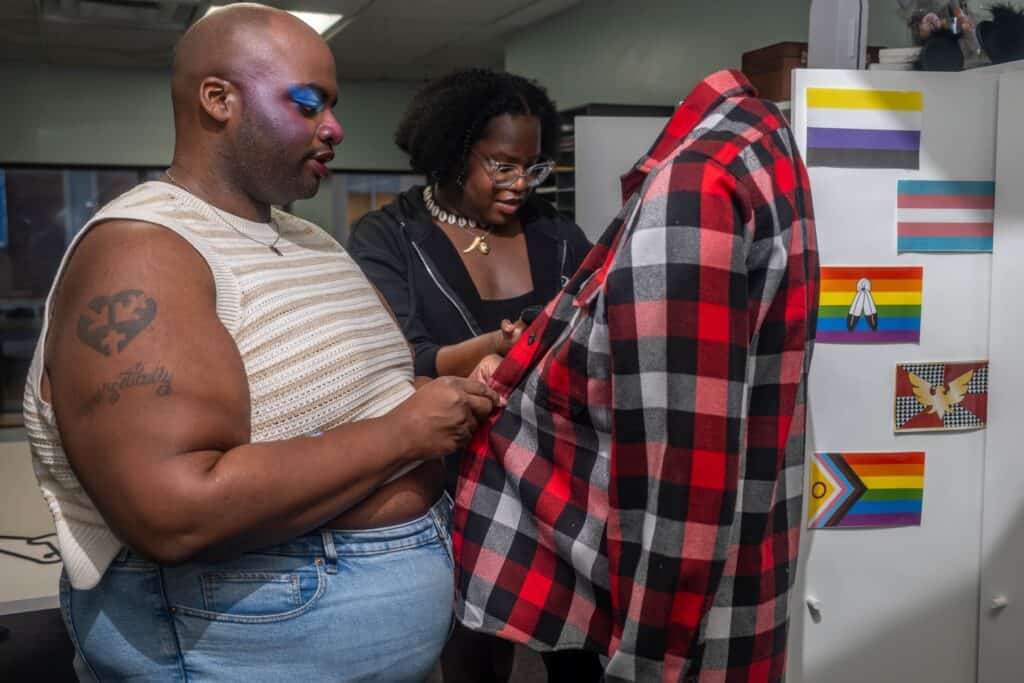
This year, Riot Youth will be bringing back Gayrilla Theater, says Hananiah Wiggins, Neutral Zone’s program director. Previously, Gayrilla was invited into schools, which she is concerned will be difficult this time around due to the reinvigorated fear among educators of being targeted for “DEI” or trans-friendly initiatives. Compared with the 2000s and 2010s, trans kids today are under a spotlight, said Wiggins — anything they do is subject to heightened scrutiny. Increased visibility has not necessarily meant increased support.
“It almost feels like a constant performance stage where you just have to be hyper-aware of how you are presenting,” Wiggins said. “I think a lot of young people right now are being educated about transness and identity, but are doing so with such a wide audience watching them.” Parents, teachers, districts, and the federal government are tangled up in debates about trans kids, “social transition,” and censorship while kids are just trying to figure out who they are.
Neutral Zone director Lori Roddy said that even though Riot Youth is small, nearly half of the young people at Neutral Zone are queer-identified — a shift that started in 2020, when, Roddy attested, things took a turn for the worse for queer kids overall.
“The world is terrifying right now,” said Wiggins. “But imagine how terrifying it is for a child, or for a young person who doesn’t hold power, or holds much less power than others who could literally pick up and move to a different country.”
Sloan said this fall, Riot Youth will focus on history and looking to the past for inspiration: “Our history is incredibly strong as queer folks. This is not the first time that the government has been like, ‘Oh, gays, no, terrible, put it away!’ And we have survived those times and we will survive again.”
The student from Huron High says they’re not worried for their own future: “I graduate in two years. But I’m more concerned about kids in elementary or middle school who are coming up and realizing they are queer…and finding out that teachers can’t protect them,” they said.
“It’s really infuriating and upsetting to not be taken seriously over something that feels like such an obvious sign of danger and systematic breakdown,” said trans high school student M.L. “This is bad.” And as someone whose teenage years have been spent watching institutions fold to anti-trans fervor, he doesn’t expect it to get better.