
Latine, Latinx, Hispanic Heritage Month 2026: A Trans and Gender Non-Conforming Resource Guide
Latine, Latinx, or Hispanic Heritage Month runs from September 15th through October 15th every year. What originally started as Hispanic Heritage Week in 1968 transformed into National Hispanic Heritage Month two decades later. The specific dates hold significance as many Central American countries celebrate their Independence Day around this time, starting with Costa Rica, El Salvador, Guatemala, Honduras, and Nicaragua on September 15th; Mexico on September 16th; Chile on the 18th; and Belize on the 21st.
When it comes to what to call this month, it’s ultimately up to you. “Hispanic” was the word that was used originally because it was a popular term in the 1970s for people who speak Spanish. However, “hispanic” also carries nuances of colonialism through its association with Spain, and excludes countries like Brazil where Spanish is not the primary language. As such, the term Latino emerged. While Latino has often been used to refer to an individual or group of people, its masculine character prompted the birth of Latinx and Latine as gender-neutral options.
Whether you observe this month as Latine, Latinx, or Hispanic Heritage Month, you have the right to define your relationship to this time in whatever ways most honor the truth of your identity and lived experience.
Some ways may include:
- Studying the lives and legacies of trans and queer Latin American elders
- Hosting or attending events rooted in queer cultural storytelling and mutual aid
- Supporting trans and queer Latine organizations
Latine/Latinx History
Heritage months tend to produce a particular kind of history: flags, food, a few names of historical figures that most people already know about. This guide proposes a different history, one that centers the ways that gender-expansive people have been part of Latin American life for far longer than any federal government’s recognition.
Among the Zapotec people of southern Mexico, muxe (pronounced moo-shay) describes a third gender that has been part of community life since before the Spanish arrived. Muxes are generally assigned male at birth and take on feminine roles, though the identity covers a wide spectrum and often involves preservation of traditional Zapotec culture.
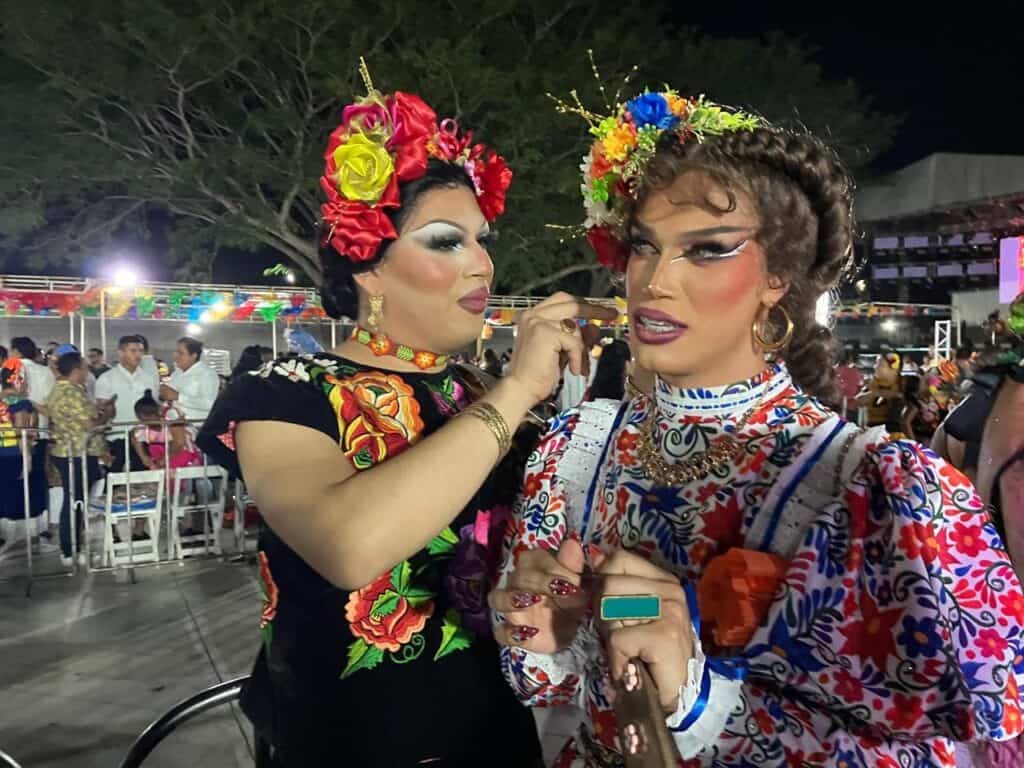
Every November, the muxe organization Las Auténticas Intrépidas Buscadoras del Peligro hosts a vela in Juchitán, a multi-day celebration of mass, parade, and pageant that draws thousands. It has been running for more than four decades. The muxe-led tradition of the vela answers a question people still ask: Can a culture hold gender diversity as ordinary rather than exceptional? The community in Juchitán has been proving that the answer can be yes for generations.
Down in Argentina and Brazil, travesti is a distinct identity reclaimed from a slur that carried the colonial history of Latin America. It’s deliberately claimed as a political position in addition to a medical one. Lohana Berkins of Argentina founded the Asociación de Lucha por la Identidad Travesti y Transexual in 1994 and led it until her death. In Brazil, travestis like Erika Hilton and Duda Salabert have been active in the political scene to push for more protections for trans women in a country with one of the highest number of transfemicides.
Learn More
Trans and travesti Latine people have been documenting themselves for decades, often while the state was trying to erase the record. Some of that work has won major awards. Some of it exists because one woman in Buenos Aires kept a box of photographs. All of it is more interesting than what has been written about us from the outside.
Books
- Faltas: Letters to Everyone in My Hometown Who Isn’t My Rapist by Cecilia Gentili (2022). Won the ALA Stonewall Book Award for nonfiction in 2023 and was a Lambda Literary finalist. A memoir of a trans girlhood in 1970s Argentina, told in letters.
- Bad Girls (Las Malas) by Camila Sosa Villada (2019, English translation 2022). A novel about a travesti community in Córdoba, by an Argentine travesti writer. Winner of the Sor Juana Inés de la Cruz Prize.
- Translocas: The Politics of Puerto Rican Drag and Trans Performance by Lawrence La Fountain-Stokes (Puerto Rico, 2021). Drag and trans performance on the island and in the diaspora, and what travels between them.
Archives
- Archivo de la Memoria Trans: María Belén Correa and Claudia Pía Baudracco began this project as a closed Facebook group, to find photographs and contacts of trans women scattered across Argentina. The archive now holds thousands of documents running from the early twentieth century through the 1990s, including photographs, film, audio, letters, ID cards, passports, personal diaries, and police files. That last category holds an important place in the archive;. for many of these women, the only record the state kept of their existence was an arrest sheet or a psychiatric file. The archive received an honoris causa distinction from the National University of La Plata in 2023 and publishes books and zines from the collection.
- Archivo de la Memoria Trans México: Founded in 2019 by Brandy Basurto, Emma Yésica Duvali, Terry Holiday, and César González-Aguirre, and launched online in 2022 at the Museo Universitario del Chopo. It is built from the collections of trans women now in their fifties and older, with photographs running from the 1970s through the 1990s. One of the things that set it in motion was the death of Mexican transgender actress and former child actor Coral Bonelli in 2019 and her family’s effort to keep her materials from disappearing. It is free and public, which is less common than it should be.
- Archivo de la Memoria Transmasculina de Latinoamérica: Presented in Guatemala City in October 2025, this archive collects the histories of 16 trans men and transmasculine people over 40 across 13 countries, including Bolivia, Brazil, Cuba, Ecuador, El Salvador, Guatemala, Honduras, Panama, Puerto Rico, and the Dominican Republic. Research by Pau González Sánchez and Jhonnathan Espinoza Rodríguez. It’s unique, because transmasculine histories often go missing even within trans archives.
Watch
Muxes: Auténticas, intrépidas, buscadoras de peligro (2005), Alejandra Islas’s documentary on the muxe community of Juchitán.
Mala Mala (2014), on trans life and drag performance in Puerto Rico.
Listen
The TransLash Podcast archive, including conversations with trans Latine organizers.
What’s Changed This Year
What this guide offers is practical:
- Who to call if you or someone you love is detained.
- Which organizations are trans and Latine-led, what they actually do, and where they are.
- Where to find health care, housing help, and legal aid that will not misgender you or ask about your papers.
Immigrant detention has expanded significantly. In early 2026, book-ins, physical admissions, and registrations of individuals into detention centers increased by more than 60% compared to the same period last year, according to the Vera Institute. Trans people are included in these numbers but it’s no longer possible to track how many. ICE stopped publishing its statistics of transgender people in custody in February 2025, despite this being a Congressional requirement for reporting.
What journalists documented this year is consistent across states. In August, The New York Times reported that trans women in at least 10 ICE facilities had their hormone therapy cut off abruptly. They spoke with Camila Toro de Paula, a 25-year-old Venezuelan asylum seeker who has spent more than a year in a men’s facility in Jena, Louisiana. “I’m afraid of dying here,” she said to The Times in Spanish.
Lookout News identified at least 20 trans women detained across Arizona and Colorado alone, many of whom developed severe physical and psychological symptoms once their hormone therapy was denied. In September, The Marshall Project interviewed more than half a dozen trans women across three facilities in Louisiana and Texas and found that women were experiencing the same things: sexual assault, constant harassment from staff and other detainees, deadnaming despite up-to-date IDs, and long periods in punitive isolation cells.
Karla Saenz has lived on both sides of this terror, as an organizer and someone who has been detained by ICE. The 26-year old Venezuelan trans woman in Phoenix spent a year organizing with Trans Queer Pueblo for the release of Arbella “Yari” Rodriguez Marquez. And then in March of 2026, Saenz went to what she expected to be a routine immigration check-in and was detained instead. She spent 44 days at Eloy—mostly in the men’s unit— with five days in isolation, and was forced to go weeks without her hormones. She refused to sign voluntary departure papers more than ten times. A judge ordered her release in April.
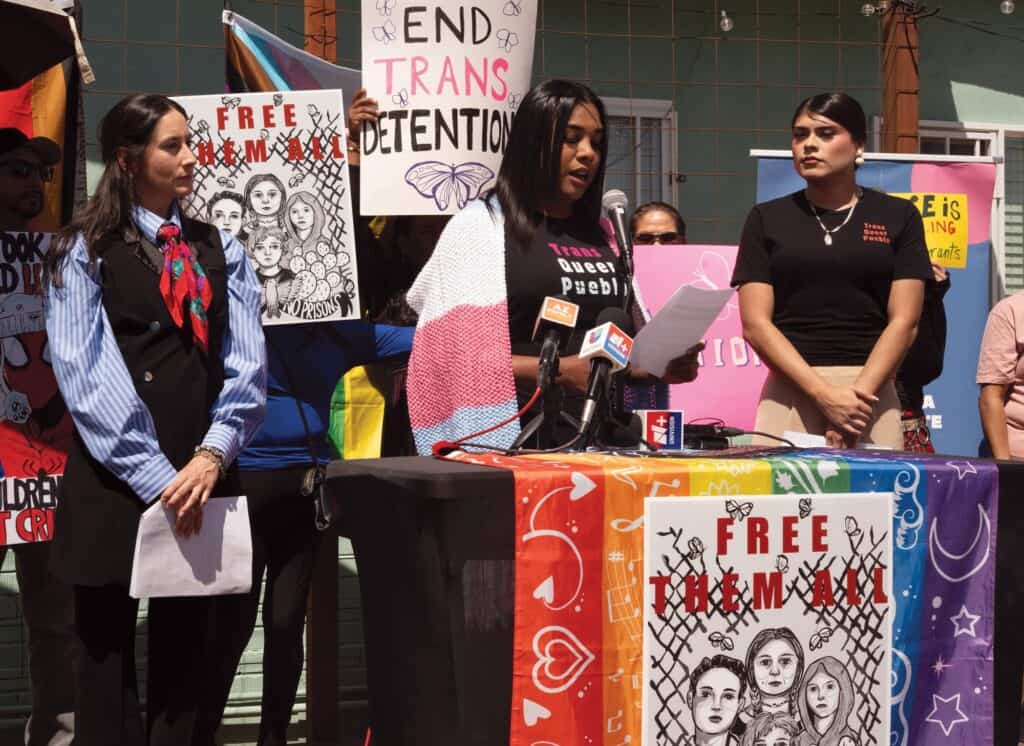
“I always stood firm: that I am a trans woman, that I’m Karla Saenz, and that I won’t let anything or anyone rob me of my identity.”
In March 2025, Executive Order 14224 declared English the official language and revoked the 25-year-old rule requiring federal agencies and federally funded programs to provide language access. LEP.gov—a U.S. federal website providing support for people with Limited English Proficiency (LEP)— was taken down. In February 2026, the Interior Department gave its bureaus one business day to delete non-English content from department websites. More than 25 million people in this country have limited English proficiency.
If You or Someone You Love Is Detained
Detention moves faster than people expect, and the window to find an attorney is usually narrower than it seems. Nobody plans for this in advance, but putting one of these numbers in your phone could be useful in the future. Several of these organizations will take a question about someone who is detained regardless of where the facility is located.
- Immigration Equality: Free legal services for LGBTQ+ and asylum seekers living with HIV, including a dedicated detention hotline running since 2019. The organization reports that LGBTQ+ people are 97 times more likely to be sexually assaulted in immigration detention than other detained people, and that trans women face the highest risk. In June 2026, it published a report on LGBTQ+ people being deported under third-country agreements to places where they face persecution.
- National Immigrant Justice Center: The LGBTQ+ Immigrant Rights Initiative serves low-income LGBTQ+ immigrants and people living with HIV. It takes questions about detained people regardless of where in the country the facility is located.
- Al Otro Lado: Its LGBTQ+ Program provides legal and humanitarian support to people seeking refuge in the U.S. or Mexico. It also represents detained immigrants in habeas petitions and files civil rights complaints in individual cases.
- Unlocal: The Queer Immigrant Justice Project represents queer immigrants in immigration court and at the asylum office, and connects clients to health care, housing, and transition support.
- Oasis Legal Services: Legal representation for low-income LGBTQ+ immigrants who have survived violence or persecution, paired with social services.
- Transgender Law Center: National org specializing in litigation and advocacy, including on conditions inside immigration detention.
- Organización Latina Trans in Texas: Houston-based org; its Defensa de Deportación program connects detained people with immigration attorneys and organizes for their release. Call 713-485-4414.
Trans and Latine-Led Organizations To Know and Support
Every organization below is run by trans Latine people, most of them immigrants, several of whom built the thing they needed because nobody else would. They know what the intake form should ask. They know what happens if you give the wrong agency your address.
- The TransLatin@ Coalition: Founded in 2009 by trans, gender non-conforming, and intersex immigrant women, TLC is led by president and CEO Bamby Salcedo, with Maria Roman-Taylorson as vice president and COO. It runs job programs, housing support, and the Center for Violence Prevention and Transgender Wellness. On April 10, 2026, it broke ground on a $30 million, 24,000-square-foot building at 5314 Sunset Boulevard in Los Angeles, CA with behavioral and mental health urgent care, outpatient treatment, and a wellness center. It is scheduled to open in 2027.

- Organización Latina Trans in Texas: OLTT began in January 2015, after founder Anandrea Molina and other trans women were barred from a women’s restroom at a Houston venue hosting LGBTQ+ programming. About 70 trans Latinx immigrant women gathered in response. In April 2017, OLTT opened Casa Anandrea by taking in two trans sisters who had won asylum and had nowhere to go after release. It remains the only LGBTQIATS+ migrant shelter in the Houston area and prioritizes undocumented people and people living with HIV. OLTT also runs support groups, assists with name and gender marker changes, and works on deportation defense. To request a bed, call 713-485-4414.
- El/La Para TransLatinas: El/La formed in 2006 out of the closure of Proyecto ContraSIDA por Vida, building on two decades of HIV prevention work with translatinas in the Mission District. Marcia Ochoa, Alexandra Rodriguez de Ruiz, and Isa Noyola are credited as founders. It is the only organization in California providing direct services solely to translatinas, in Spanish, across violence prevention, peer counseling, case management, and accompaniment to appointments. Nicole Santamaría, a Salvadoran intersex and trans human rights advocate who came to the U.S. seeking asylum, is its executive director.
- Trans Queer Pueblo: TQP grew out of undocumented student organizing and anti-deportation work, when AZQUIP and the Arcoíris Liberation Team came together in 2015 around building a community clinic. It incorporated in 2016 as a collectively governed LGBTQ+ migrant organization. It runs a free clinic offering primary care including hormone therapy for undocumented and migrant patients, legal clinics for asylum and name changes, a community closet, and Proyecto Liberación, a collective of previously detained LGBTQ+ migrants working to free others still inside.
- Colectivo Intercultural TRANSgrediendo: Founded in 2015 by Lorena Borjas, CITG works on human rights and comprehensive health care access for trans and gender non-binary people, sex workers, and people living with HIV. Liaam Winslet, a trans migrant organizer Borjas mentored, leads the group now.
- Translatinx Network: Founded by Cristina Herrera, TLN connects trans Latinx people to legal aid, HIV prevention, support groups, and immigration assistance.
- Arianna’s Center: Founded in 2015 by Arianna Lint, a refugee and former lawyer from Lima, Peru, after she realized there were no trans-led agencies in South Florida. Programs include HIV testing and linkage to care, PrEP access, emergency stipends, GED and ESL classes, and two weeks of emergency housing for trans people released from jail or detention. Clients are predominantly trans women of color, formerly incarcerated people, and people navigating the immigration system.
Regional and Community Organizations
Smaller than the organizations above, these orgs are often the ones that know your local landscape. Which clinic is actually affirming in practice?. Which parts of town should you avoid? Who can help with food assistance? Some are Latine-specific, some are QTPoC organizations whose work overlaps heavily.
- Latino LinQ (Atlanta): Latinx LGBTQ+ health, HIV services, and community programming in Georgia
- CALOR (Chicago): Bilingual HIV services and case management for Latinx communities
- QLatinX (Orlando): Formed after the Pulse shooting, organizing for LGBTQ+ Latinx people in Central Florida
- Trans-Latinx DMV (D.C., Maryland, Virginia): Community support and advocacy for trans Latinx people in the capital region
- TransFamily Support Services, Latinx Branch (San Diego): Family support and navigation for trans youth and their parents
- Familia: Trans Queer Liberation Movement (national): Organizing and advocacy for trans and queer Latinx liberation
- Marsha P. Johnson Institute (national): Organizing and direct support for Black trans people
- Audre Lorde Project (New York City): LGBTSTGNC people of color community organizing
- House of GG (Southern U.S.): Retreats and leadership development for trans people in the South
- Connie Norman Empowerment Center (Los Angeles): Trans-led community space and services
- The Okra Project (national): Food and wellness support for Black trans people
- Brave Trails (national): LGBTQ+ youth camp and leadership programs
Advocates Carrying This Work Forward
These six individuals run the organizations above. Most are immigrants. Several built the service they needed after being told it did not exist. Follow them, book them to speak, and cite them when you write about this community.
Bamby Salcedo: President and CEO of the TransLatin@ Coalition. A trans Latina organizer whose work spans immigration, HIV, incarceration, and youth.
Anandrea Molina: Founder and executive director of OLTT. She came to the United States as an undocumented trans woman and has been open about surviving abuse, addiction, and homelessness. The Houston shelter carries her name.
Nicole Santamaría: Executive director of El/La Para TransLatinas. A Salvadoran intersex and trans woman who sought asylum in the U.S. and now runs the only California organization dedicated solely to translatinas.
Liaam Winslet: Executive director of Colectivo Intercultural TRANSgrediendo. A trans migrant, transfeminist, and sex worker who took up the work of the woman who mentored her.
Cristina Herrera: Founder and CEO of Translatinx Network. She knew Lorena Borjas from 1987 and has spent decades moving trans Latinx New Yorkers into documentation, work permits, and stability.
Arianna Lint: Founder of Arianna’s Center. A trans Latina openly living with HIV who built one of Florida’s first trans-led organizations after experiencing housing discrimination herself.
The Elders Who Built This

Sylvia Rivera (1951–2002): A Puerto Rican and Venezuelan trans activist in New York who co-founded STAR and spent her life insisting that a movement which abandons its poorest members is not a movement.
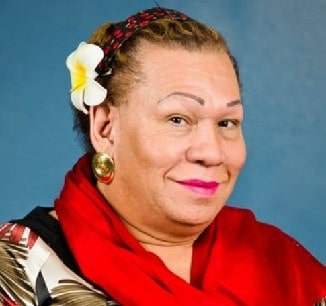
Lorena Borjas (1960–2020): Known as the trans mother of the Latinx community in Queens. Over more than 25 years she did HIV testing and syringe exchange, supported trafficking survivors and sex workers, founded Colectivo Intercultural TRANSgrediendo, and co-founded the Lorena Borjas Community Fund with Chase Strangio to break the cycle of arrest, jail, and deportation. She died of COVID-19 complications in March 2020. New York State later created a wellness and equity fund in her name.
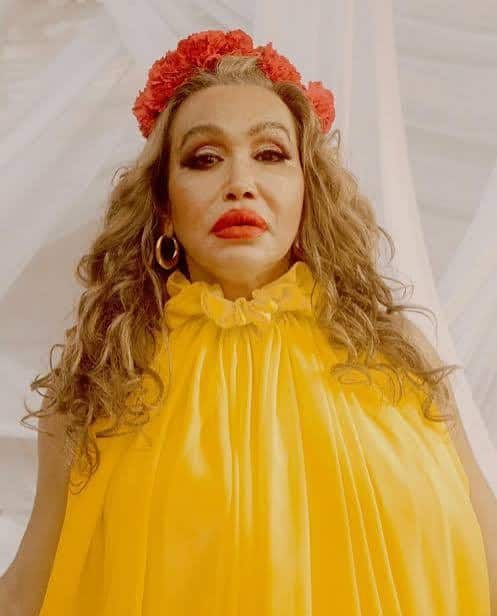
Cecilia Gentili (1972–2024): An Argentine trans woman, writer, actress, and advocate who helped end New York’s “walking while trans” ban, was a founding member of Decrim NY, and mentored a generation of trans organizers.
You do not need to speak Spanish, pass, or fit anyone’s category to claim this heritage. A culture in Oaxaca has held three genders as ordinary since before the Spanish arrived. Travestis in Argentina and Brazil turned a slur into a political identity and then into law. A trans woman in Houston runs the only shelter in her city that will take an undocumented migrant living with HIV.
That is the heritage. It lives in the community, the work, and the legacies left behind.