
Latinx AIDS Awareness Day 2026: A Trans and Queer Resource Guide
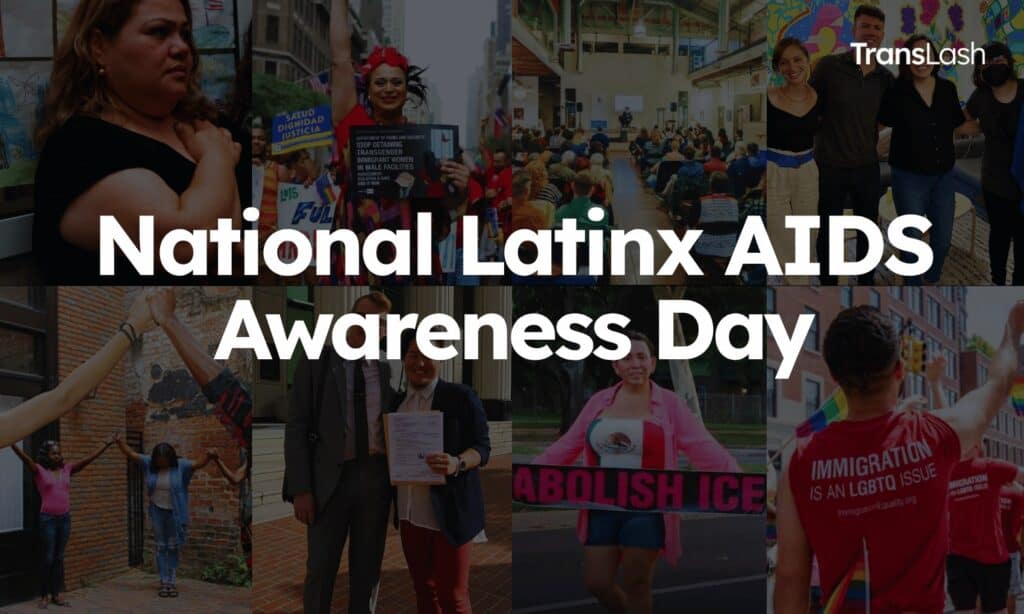
This National Latinx AIDS Awareness Day, we are centering the trans and queer Latine advocates who are resourcing and supporting the community on every aspect of living with HIV.
On October 15, communities across the country mark National Latinx AIDS Awareness Day, known as NLAAD. The Latino Commission on AIDS and the Hispanic Federation founded the day in 2003, and it intentionally falls on the last day of Hispanic Heritage Month (NIH). The idea is simple: Celebrating a community includes looking at the good, and at the hard facts.
This year’s theme is Knowing Your HIV Status is a Good Place to Start. While it may seem simple, the message lands with added weight in 2026. For many Latine people, especially trans Latinas, recent migrants, and the LGBTQ+ community, visiting the clinic carries a new concern: Is it safe to leave the house? Will I be targeted by immigration? HIV in these communities has never been just a medical status; it is an experience shaped by language access, cultural and religious stigma, and immigration policy that can make healthcare access itself a challenge.
The Data
Latine people make up about one in five people in the U.S. In 2024, they accounted for a third of new HIV diagnoses: 12,860 people. The Centers for Disease Control and Prevention’s (CDC) 2024 surveillance release puts the Hispanic/Latino diagnosis rate at 0.024%. The national rate is 0.01%
Between 2010 and 2022, new diagnoses fell by 12% nationally but rose by 24% among Latine people. Among men over 24, Latinos now account for the largest share with 40% of new diagnoses attributed to sex between men. Prevention is also not being adopted as quickly. Latine people made up 34% of new diagnoses but made up only 18% of PrEP users in 2025 (AIDSVu).
For trans Latinas, the situation is even harder still. In the CDC’s 2019-2020 survey of 1,608 trans women in seven cities, 35% of Latina trans women tested positive for HIV—twice as many as white trans women.
These numbers are not inevitable, though. They are a result of policies dictating who gets health insurance, who is counted, and who feels safe enough to get tested and know their status.
Immigration enforcement has become one of the biggest barriers to HIV care in our communities. In Minneapolis, HIV testing among Latine residents dropped dramatically after ICE’s Operation Metro Surge began in December 2025. Nationally, 83% of HIV providers who saw undocumented patients stop coming in pointed to fear of immigration enforcement.
Inside detention, trans women living with HIV are paying the highest price. Since the Department of Homeland Security scrapped basic protections for trans detainees in February 2025, specialized care has stopped at at least 10 facilities. Camila Toro de Paula, a trans woman from Venezuela living with HIV, says staff at a men’s facility in Louisiana forced her to wear a mask and gloves because of her status. HIV does not spread through the air.
At the same time, the federal government is erasing data and cutting funding. In 2025, the CDC pulled HIV data on Latine and trans people from its website. Now the White House’s FY2027 budget proposes eliminating the CDC’s entire $755.6 million HIV prevention program. Congress rejected the deepest cuts last year, but the government is running on a stopgap through December 11, and the fight is far from over.
Trans and Queer Latine-Led Organizations To Know and Support
These organizations are led by the communities they serve. From Los Angeles to Puerto Rico, Phoenix to Seattle, these groups provide HIV testing and prevention, housing support, and even legal services. These harm reduction methods are what ultimately help keep the community healthy and knowledgeable about their HIV status.
The TransLatin@ Coalition – Los Angeles, California Founded in 2009 by Bamby Salcedo, TLC is the largest organization in the country dedicated to Latinx trans, nonbinary, and gender nonconforming people. Its Center for Violence Prevention and Transgender Wellness offers HIV prevention and testing, PrEP and PEP, housing, legal services, and reentry support. When federal funding cuts hit in 2025, the community answered: TLC’s first Walk4Humanity raised more than $462,000 for its services, including HIV care and prevention.
El/La Para TransLatinas – San Francisco, California El/La began in 1993 as a program of Proyecto ContraSIDA Por Vida and became its own project in 2006 after its parent organization lost funding. It was the first trans Latina HIV prevention program in Northern California. Today it offers HIV outreach, testing, and peer counseling in Spanish, plus violence prevention, the Luchadoras leadership program, and an evening drop-in space in the Mission neighborhood. Most of its staff are trans latinas, many of them former clients.
Arianna’s Center – South Florida and Puerto Rico Founded in 2015 by Arianna Lint, a trans Latina openly living with HIV, Arianna’s Center serves trans people across South Florida and, since 2019, Puerto Rico. In 2023 it linked more than 100 people to HIV care across both locations and connected more than 70 to PrEP. It also runs a legal name change program and has bought bus tickets for trans women released from ICE custody.
Colectivo Intercultural TRANSgrediendo – Queens, New York Founded in 2015 by trans Latinx migrants, sex workers, and people living with HIV, CITG grew from the work of Lorena Borjas, the trans mother of Jackson Heights. Executive director Liaam Winslet carries that legacy forward by offering HIV testing, food support, and help covering bills for hundreds of trans women, many of them immigrants and sex workers.
Trans Queer Pueblo – Phoenix, Arizona Formed in 2016, Trans Queer Pueblo is collectively governed by more than 300 trans and queer migrants and people of color. It runs a free community health clinic that has served about 200 patients, supports LGBTQ+ people held in Arizona’s immigration detention centers, and has helped win the release of 18 detained community members.
Entre Hermanos – Seattle and Yakima, Washington Founded in 1991 during the AIDS epidemic, Entre Hermanos is Washington’s first Latine LGBTQ+ organization. It offers free HIV and STI testing every weekday, PrEP, HIV case management, immigration legal services, and Las Monarcas, a peer-led support group for trans Latinas. In 2025 it opened an office in Yakima to reach rural queer and trans Latine people in Central Washington.
QLatinx – Orlando, Florida Queer and trans Latinx people began gathering within 48 hours of the 2016 Pulse shooting, which happened on Latin Night. That gathering became QLatinx, a home for LGBTQ+ Latine people across Central Florida. Its work has included HIV prevention education and an HIV justice program.
More Latine HIV Organizations Worth Uplifting
These organizations are not all trans or queer-led, but they have shaped the Latine HIV response for decades and remain central to it, including for LGBTQ+ people.
Latino Commission on AIDS – New York, national The Commission co-founded NLAAD and still organizes it every year. It offers HIV testing and referrals for PrEP, PEP, and treatment, and runs the Oasis LGBTQ+ wellness center in New York. Its Zero Homophobia/Transphobia Initiative recently put out a national call for LGBTQ+ Latine leaders to join its COMPES Collective.
Latinos in the South – regional, based in North Carolina A program of the Latino Commission on AIDS, Latinos in the South organizes Latine communities across the region around HIV care, PrEP access, and policy. It names the barriers plainly: HIV criminalization laws, xenophobia, anti-LGBTQ policy, and clinics that lean on a single bilingual staffer to hold the whole system together.
Bienestar Human Services – Greater Los Angeles, California Founded in 1989 at the height of the AIDS crisis, Bienestar serves Latine and LGBTQ+ Angelenos with a fully bilingual staff. Its free services include HIV testing and treatment, PrEP, trans health, harm reduction, housing support, and a food bank.
La Clínica del Pueblo – Washington, D.C., and Hyattsville, Maryland Founded in 1983 by Salvadoran refugees and volunteers, La Clínica launched HIV services in 1989 and became a lifeline for D.C.’s Latine LGBTQ+ community during the epidemic. Today it is a federally qualified health center offering bilingual HIV prevention and care alongside primary and mental health services.
Advocates Carrying This Work Forward
Bamby Salcedo (she/her): Founder and president of The TransLatin@ Coalition and a long-term survivor of HIV. Before launching TLC full time, she spent eight years coordinating HIV prevention at Children’s Hospital Los Angeles. She has pushed national HIV leaders to stop counting trans women alongside men who have sex with men, and to put trans people in leadership.
Arianna Lint (she/her): Founder and CEO of Arianna’s Center. After her own HIV diagnosis in the U.S., she began volunteering at a Florida HIV clinic and went on to build the first place many trans people in South Florida and Puerto Rico turn to for help.
Liaam Winslet (she/her): Executive director of Colectivo Intercultural TRANSgrediendo. She did HIV outreach as a young peer educator in Guayaquil, Ecuador, won asylum in the U.S. in 2013, and now leads one of New York’s most vital trans Latina organizations (Latino Rebels; Our Voices Are Free). In 2024 she received an honorable mention for a national award recognizing Medicaid advocacy.
Joaquín Carcaño (he/him): A Mexican American trans man from South Texas whose HIV work began as an AIDS hospice volunteer in college. He coordinated HIV services for Latine communities at UNC-Chapel Hill and served as lead plaintiff in the fight against North Carolina’s anti-trans law HB2 (ACLU). He has since organized with Latinos in the South.
Carlos “Carlitos” Díaz Rodríguez (he/him): A community organizer and artist who started at QLatinx as an HIV testing counselor after his cousin was shot at Pulse. He went on to lead the organization’s HIV justice program.
Guillermo Chacón (he/him): President of the Latino Commission on AIDS. He credits local groups with turning NLAAD from an awareness day into a national movement, through free testing events, food and music festivals, faith gatherings, and even beauty pageants built to meet people where they are.
Those We Carry With Us
Lorena Borjas: A trans activist from Mexico, remembered as the trans mother of the Latinx migrant trans community in Queens. She founded what became Colectivo Intercultural TRANSgrediendo and died of COVID-19 complications in March 2020.
Cecilia Gentili: An Argentine-born trans activist who built a trans health program at Apicha Community Health Center, worked on policy at GMHC, and helped repeal New York’s “walking while trans” law. She died on February 6, 2024.
Roxsana Hernández: A Honduran trans woman living with HIV who came to the U.S. seeking safety. She died in May 2018, a little more than two weeks after entering ICE custody. Her name is part of why advocates are fighting for trans detainees today.
This year’s theme says that knowing your status is a good place to start, and that’s true. But getting a test means having a clinic you trust on the other side of it, staffed by people who speak your language and see you as a whole person.
That is what the organizations in this guide have built, often with less money and more danger than larger organizations. NLAAD is a day to look at what trans and queer Latine people have already created, and how the community takes care of each other.