
TransLash Guide for Queer & Trans Elders

Our trans and queer elders built the world we’re living in right now. Every right we hold, every piece of language we have to name ourselves, every law that’s been won and every march that moved the needle. Our transcestors laid that groundwork on which all our liberties rest on. They did it while surviving the AIDS crisis and navigating healthcare systems that erased them. They rebuilt chosen families after their biological ones turned them away. They refused to be invisible in a world that tried everything it could to make them disappear.
And yet, as a community, we don’t always show up for them the way they showed up for us.
Approximately 2.7 million LGBTQ+ people are 50 years old or older in the U.S., and by 2030, that number is expected to reach 7 million. Transgender older adults face compounding barriers at every level: discrimination in nursing homes and assisted living, housing insecurity, inadequate access to gender-affirming care, poverty (especially for trans elders of color), and deep social isolation. For transgender elders specifically, healthcare discrimination can show up in the form of providers walking out of rooms, wrong pronouns weaponized by staff, hormone therapy abruptly cut off. To make matters worse, the current political climate, including the rollback of federal nondiscrimination protections, has intensified this crisis.
This guide is for our trans elders and seniors. For the people who didn’t think they’d make it this far — and did anyway. It’s also for anyone in the community with an elder they love, or anyone who wants to understand what it means to be queer and trans and aging in America right now. Below, you’ll find national organizations, local resources, community-built support, videos, and reading material to help our elders age with dignity, care, and joy.
Important Note: The landscape of federal and state protections for LGBTQ+ older adults is shifting rapidly. Anti-discrimination rules in healthcare and housing have been challenged or rescinded under the current administration. Stay informed through Justice in Aging and SAGE for updated legal guidance, and check Lambda Legal for real-time updates on rights protections.
What Trans “Elder” Means in Our Community
Mainstream aging services typically define “elder” as someone 65 and over. In the LGBTQ+ community, and especially among trans people, the threshold is often set at 50, and for good reason. A lifetime of stress, discrimination, and barriers to healthcare means many queer and trans people carry the physiological and psychological weight of people much older. Trans elders who came out before the 2000s often did so at extraordinary personal cost while navigating healthcare and housing systems with no legal protections at all.
Being “elder” in the trans community also carries cultural weight that goes beyond age. An elder is someone who holds wisdom, who survived when so many didn’t, who mentors and nurtures and creates chosen family. That person might be 45 or 75. This guide honors all definitions.
National Organizations & Advocacy
These organizations center the lives, safety, and dignity of LGBTQ+ and trans elders at scale:
- SAGE (Services & Advocacy for LGBTQ+ Elders): The oldest and largest national organization dedicated to LGBTQ+ aging, founded in 1978. SAGE provides direct services at centers in New York City and Southern Florida, runs the SAGEServes direct service division, maintains a SAGEYou virtual hub for online community and programming, and trains elder care providers across the country through SAGECare.
- National Resource Center on LGBTQ+ Aging: The only federally funded technical assistance center focused on LGBTQ+ aging. Run in partnership with SAGE, it provides resources, training, and guidance for elders, families, caregivers, and providers. Their library of guides on everything from legal planning to dementia care is freely available to the public.
- GRIOT Circle: The only staffed national organization exclusively focused on LGBTQ+ elders of color. Based in New York, GRIOT Circle provides health and wellness programming, grief support, communal meals, culturally affirming celebration events, and outreach for isolated or homebound members. For Black, Indigenous, and LGBTQ+ elders of color who face dramatically higher rates of poverty, health disparities, and compounding discrimination GRIOT’s work is irreplaceable.
- Diverse Elders Coalition: A policy and advocacy organization centering the voices of racially and ethnically diverse elders, American Indian and Alaska Native elders, and LGBTQ+ elders. DEC produces original policy research and advocates directly with lawmakers to ensure diverse communities are represented in aging policy.
- Justice in Aging: A national legal advocacy organization fighting poverty among older adults, with a particular focus on LGBTQ+ seniors and seniors of color. Their issue briefs and rapid-response resources on the current administration’s rollback of healthcare and housing protections are essential reading for advocates and elders alike.
- FORGE – Transgender Aging Network: A Milwaukee-based national organization focused on reducing the impact of trauma on transgender and non-binary survivors, with a specialized Transgender Aging Network offering publications, training, webinars, and resources specifically for trans elders and those who care for them.
- Movement Advancement Project (MAP): A nonprofit think tank that tracks LGBTQ+ policy nationwide, including elder-specific issues. Their interactive maps showing state-level protections for LGBTQ+ older adults are invaluable for understanding the legal landscape in your state.
Housing, Care & Crisis Resources
One of the most acute crises facing trans and queer elders is housing. SAGE has found that 48% of LGBTQ+ households have experienced adverse treatment when seeking housing, with rates even higher for trans elders. And in long-term care settings like nursing homes, assisted living, hospice, queer elders have faced everything from deliberate misgendering to physical neglect to being forced back into the closet to survive.

- Openhouse SF: San Francisco’s dedicated LGBTQ+ senior housing and services organization, serving 3,000+ LGBTQ+ elders through housing navigation, the Bob Ross LGBT Senior Center, the Trans Resilience TGNCI Support Group (meeting weekly), community engagement programs, case management, and a first-of-its-kind LGBTQ+ adult day program (“Club 75”) in partnership with On Lok. Openhouse explicitly centers trans elders and TGNCI community members in their programming. If you’re in the Bay Area, or looking for a model of what affirming elder care looks like, Openhouse is the gold standard.
- SAGECare Provider Training: If you or an elder you love is entering a care facility, look for facilities with the SAGECare credential. This training program has certified providers in all 50 states and internationally. You can request that your care facility pursue certification.
- Trans Lifeline – Relocation & Crisis Assistance: Trans Lifeline offers peer support, microgrants for identity documents, and connections to relocation assistance for trans people who need to move to safer environments. Run by and for trans people.
- Human Rights Campaign – Emergency Relocation Resources: For trans elders facing housing crises or seeking to move to more affirming regions, HRC maintains information on emergency relocation programs and community-based housing support.
- Planning With Purpose: Legal Basics for LGBT Elders: A guide from SAGE and the National Center for Lesbian Rights covering wills, healthcare proxies, chosen family protections, and other critical legal planning tools for LGBTQ+ elders whose rights may not be recognized by default.
Mental Health & Affirming Care
Trans elders carry lifetimes of compounded minority stress–the accumulated toll of discrimination, violence, forced silence, and navigating systems not built for them. Research consistently shows this population experiences higher rates of depression, anxiety, and social isolation than both cisgender peers and younger trans people. Finding a provider who understands both gender identity and the particular experience of aging while trans is not just helpful, it’s essential.
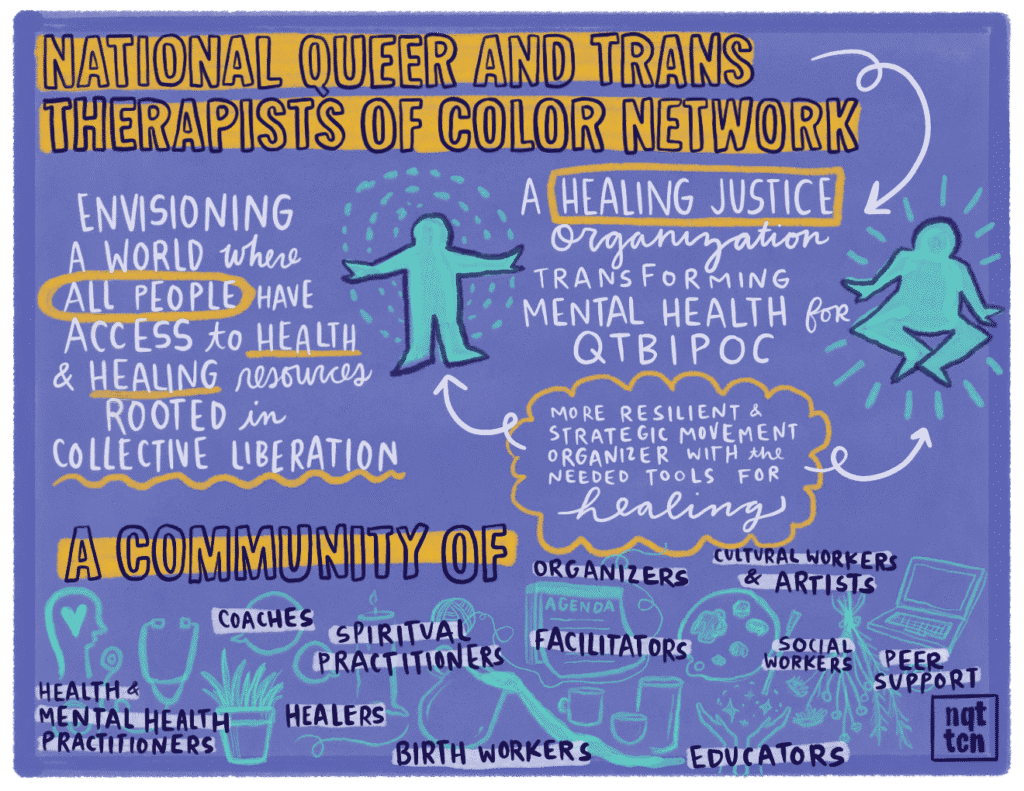
- National Queer and Trans Therapists of Color Network (NQTTCN): A healing justice organization offering a directory of mental health providers who are queer and trans people of color, centering intersectional care for QTPOC. For trans elders of color navigating compounding identity-based barriers, NQTTCN’s network is a vital starting place.
- Inclusive Therapists: A directory that allows you to search specifically for trans-affirming providers who also have experience with elder care or age-related concerns. Filters include gender identity affirmation and age-specific experience.
- GLMA Provider Directory: GLMA (formerly the Gay and Lesbian Medical Association) maintains a directory of LGBTQ+-affirming medical and mental health providers nationwide. Essential for finding affirming primary care, specialist care, and geriatric providers.
- QueerDoc: An LGBTQ+-affirming online healthcare provider offering telehealth services including hormone management, primary care, and mental health — particularly valuable for trans elders in rural or underserved areas without access to affirming in-person providers.
Community Building & Peer Support
For queer and trans elders, chosen family is just not a metaphor, it is infrastructure. Research confirms that robust social connection is one of the strongest predictors of health and longevity for any elder. For trans elders especially, peer community provides the “cultural safety” that mainstream elder care often cannot.
- SAGEYou: SAGE’s virtual hub designed specifically for LGBTQ+ older adults. Offers a calendar of online events, connection to peer communities, and resources accessible anywhere in the country — particularly valuable for trans elders in rural or conservative regions.
- GRIOT Circle Programming: For LGBTQ+ elders of color in New York (and those seeking a model), GRIOT’s year-round programming includes fitness classes, peer support groups, community meals, Pride events, and outreach to homebound members.
- SAGECollab Partner Locator: SAGE maintains a nationwide network of partner organizations that provide affirming in-person programming for LGBTQ+ elders. Search at sageusa.org to find a local partner near you.
- Trans-Specific Support Groups (Virtual): For trans elders who can’t access in-person services, community-moderated spaces on Discord and platforms like Meetup offer digital community. Search terms like “trans elders,” “LGBTQ seniors,” or “queer aging” to find active groups. Openhouse SF also runs virtual programming accessible beyond San Francisco.
- Empowerline (Atlanta): The Atlanta Area Agency on Aging, SAGECare certified, offers information and navigation for LGBTQ+ elders in the Atlanta metro area, including trans-affirming services and community connections.
Elders of Color: Specific Resources
The intersection of being trans, queer, a person of color, and an elder compounds every barrier. Black transgender elders of color face a poverty rate of 34% — nearly triple that of the general population. LGBTQ+ elders of color are growing faster than the overall LGBTQ+ elder population, and the organizations explicitly serving them are chronically under-resourced.
- GRIOT Circle: The only national organization exclusively dedicated to LGBTQ+ elders of color. Rooted in love, justice, and cultural pride — in their own words, “where legacy meets liberation.”
- Diverse Elders Coalition: National policy advocacy for racially diverse elders, American Indian and Alaska Native elders, and LGBTQ+ elders. Produces original research on the compounding effects of intersectional discrimination in aging systems.
- NQTTCN: Mental health and healing justice resources centering queer and trans people of color at all stages of life, including elders.
Videos
Seeing our elders, in their complexity and their brilliance and their survival is its own form of community care. These videos center queer and trans elders’ lived experiences:
Not Another Second: LGBT+ Seniors Share Their Stories (Official Film)
A deeply moving documentary following twelve LGBT+ seniors reflecting on the years they were forced to hide, and the lives they’ve built on their own terms. A testament to the survival and resilience of the Stonewall Generation.
Aging Matters: Aging with Pride (PBS)
PBS’s Aging Matters series explores the unique social, economic, and health challenges facing LGBTQIA+ older adults — including trans elders facing discrimination in assisted living and nursing home settings. Includes voices from SAGE and community members across the country.
LGBT Seniors Tell Their Stories | LA LGBT Center
An ongoing oral history project from the Los Angeles LGBT Center’s Senior Services program. Elders share firsthand accounts of their lives — the visibility they fought for, the violence they survived, and the community they’ve built.
A Queer Elder Couple Finds New Roots | JOYRIDE (VICE, 2025)
After years in the city, John and Lee embark on a new chapter in suburban Los Angeles. Guided by queer filmmaker Brooke Sebold, this short film is a rare centering of elder queer joy — what it looks like to build community and find your footing in a new place later in life.
Gen Silent – Official Trailer (Documentary)
The landmark documentary that sparked a national conversation about LGBTQ+ elder care. Gen Silent follows six LGBT seniors — including a trans elder — navigating the choice to hide their identities or live openly in long-term care systems that may not be safe. Available in full through libraries, institutions, and select online platforms.
Reading & Research
For those who want to go deeper, these articles, essays, and reports center the reality of aging while trans:
- Threats to LGBTQ+ Older Adults in Health Care, Economic Security, Housing, and Elder Rights (Justice in Aging, 2025) — A rapid-response brief documenting the specific impacts of the current administration’s rollback of nondiscrimination protections on LGBTQ+ elders.
- Aging While Transgender: Unique Issues (SAGE) — A foundational SAGE report documenting the employment, housing, and healthcare discrimination that trans elders face at disproportionate rates, with recommendations for policy reform.
- Aging While Trans (Empowerline) — A community-forward piece centering the voices of trans elders and the chosen family networks they create and sustain — including the role trans elders play as “house mothers” and “pops” to younger community members.
- Stonewall Generation Confronts Old Age, Sickness, and Discrimination (KFF Health News) — Reporting on the specific challenges facing LGBTQ+ elders in long-term care settings, including documented patterns of discriminatory treatment against trans patients.
- Trans Aging: A Legacy of Visibility (SAGE Trans Legacy Campaign) — SAGE’s photo-narrative project celebrating the vibrancy and resilience of older transgender community members, including iconic performer Miss Simone of the West Village.
- Trans Elders Speak Out as Anti-Trans Attacks Escalate (OutSmart Magazine / CNN, 2025) — Trans people over 60 reflect on what they’ve survived and what they’re fighting for now. Includes performer Justin Vivian Bond, who began HRT in their 50s, and others who have outlasted every prediction that they wouldn’t.
Voices to Follow
Centering trans and queer elders in our feeds and conversations is its own form of intergenerational care. A few voices worth seeking out:
- Miss Major Griffin-Gracy — Stonewall veteran, trans elder, and longtime advocate for incarcerated trans women, who recently passed in 2025. A foundational voice in trans liberation history who remains active in community organizing. Search her name on YouTube for interviews, panels, and oral history recordings.
- Justin Vivian Bond — Artist, performer, and MacArthur Fellow whose decades of gender-expansive performance and recent public reflection on HRT after 50 offer a portrait of what it looks like to move through the world on your own terms, at every age.
- SAGE on YouTube — @SAGEUSA — SAGE’s channel features interviews with trans elders, community documentaries, panel discussions on aging policy, and the Trans Legacy Campaign, which profiles trans elders in their own words.
- Openhouse SF on Instagram — @openhousesf — Real programming, real faces, real trans elders in community. One of the few consistent social media presences centering LGBTQ+ seniors in daily life, not just crisis.
Our elders are already here. They are not waiting to be rescued — they are building community, mentoring chosen family, and surviving systems that never accounted for their existence. What we can do is resource them, see them, and show up.
For more resources and stories that save trans lives, check out the Trans Relocation Guide: Finding Trans Asylum and Safe Havens.