
The Founding Generation We Weren’t Taught: Trans and GNC Pioneers of Early America
By Kai Proschan
10 min read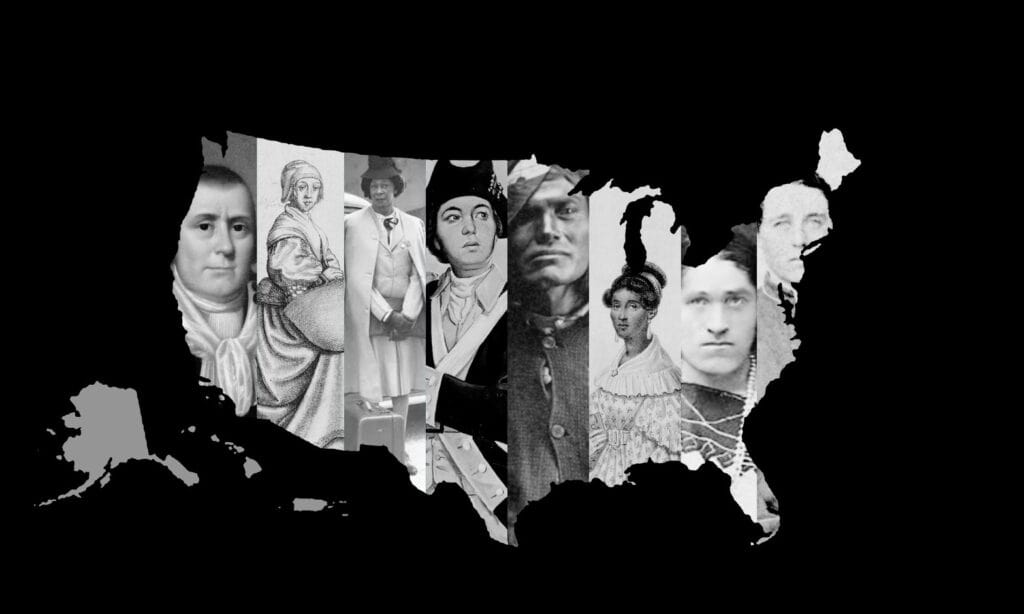
Long before people used the term “transgender” to identify, there were those who lived outside the gender constructs they were handed. They preached to crowds, they fought as soldiers in battle, and some stood before colonial courts and refused to be put into a box. As America marks its 250 year anniversary this year, we must remember the queer and trans individuals who were here from the start.
They’re not a footnote or an afterthought. This is the founding generation.
The Public Universal Friend (1752 – 1819)
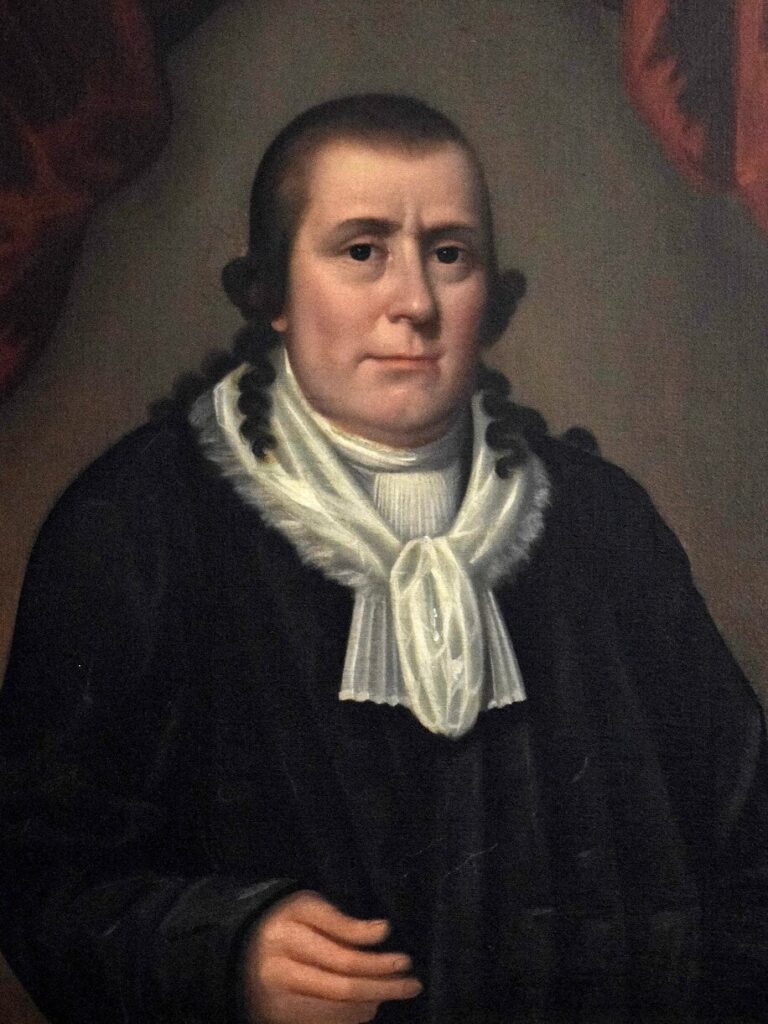
On October 11, 1776, 23-year old Jemima Wilkinson nearly died from a fever that had already torn through her household in Cumberland, Rhode Island. As Wilkinson woke up, miraculously, she was a changed person. The woken person announced that Jemima had died and a divine spirit, neither male nor female, had taken her place. From then, they would be known as the Public Universal Friend
From that day forward, the Friend refused to answer to Jemima Wilkinson outright, ignoring or correcting anyone who used it. They asked for nongendered pronouns and cut their hair short on top with curls left long in the back. They dressed in a man’s vest and necktie with a woman’s skirt, a look so striking that local newspapers covering the sermons fixated more on the clothing than the message. Although the Friend’s own Quaker community disowned the entire Wilkinson family, this didn’t slow the Friend down. For over a decade, the Friend preached across Rhode island, Massachusetts, Connecticut, and into Pennsylvania, attracting crowds large enough to worry established churches, all while calling for the abolition of slavery and telling the women in the audience that they answered to God, not their husbands.
By the late 1780s, the Friend and a devoted circle of followers–many of them unmarried women who ran their own households–pooled their resources and bought land in the wilderness of western New York. They built a settlement they called Jerusalem, near what’s now Penn Yan. The Friend lived out the rest of their life there, preaching until days before their death in 1819. The house still exists and is on the National Register of Historic Places.
250 years later, the Public Universal Friend remains one of the clearest examples we have of a genderless individual who publicly declared and defended their identity in the same decade the Declaration of Independence was signed.
Deborah Sampson /Robert Shurtleff (1760 – 1827)
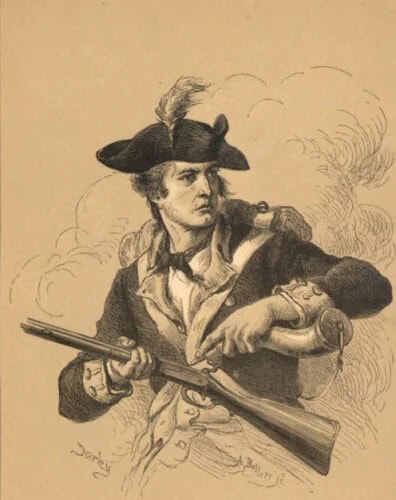
Debroah Sampson first attempted to enlist in the army and failed. In 1782, she tried under the name Timothy Thayer, but got recognized by a neighbor before she even signed the papers. That didn’t stop her. She wove her own cloth, sewed it into a soldier’s coast and breeches, and on May 23, 1782, walked into a recruitment station in Uxbridge, Massachusetts, and enlisted as Robert Shurtleff. Standing at 5’7”, she was assigned to the Light Infantry Company of the Fourth Massachusetts Regiment, an elite unit that only took soldiers tall and strong enough to keep pace on rapid marches. Nobody in that company thought to look for a woman among them.
For the next year and a half, Shurtleff marched through the Hudson Valley, ran reconnaissance missions, and saw combat. Near Tarrytown, New York, in the summer of 1782, Shurtleff was shot in the thigh and slashed across the forehead with a sword. He begged the other soldiers not to bring in a doctor. A doctor treated the head wound anyway, but Shurtleff slipped out of the hospital before he could get to the leg, and dug the musket ball out himself with a penknife and sewing needle.
Some of the shot was in too deep to reach. It stayed in that leg for the rest of Sampson’s life.
The disguise finally broke in Philadelphia in 1783, when a fever left Shurtleff unconscious and a doctor discovered the truth while treating her. Sampson was given an honorable discharge that October, by General Henry Knox himself.
What happened next is the part people leave out.
Sampson didn’t just disappear back into expected womanhood. In 1802, at 41 years old, she took the stage of Boston’s Federal Street Theater for the first solo lecture tour by a woman in American history. She walked audiences through the process of how she’d bound her chest, taken a man’s name, and marched with the infantry. Then she left the stage, came back in her old uniform, and performed a full 27-step manual-of-arms drill without missing a beat.
She toured Massachusetts, Rhode Island, and New York by herself, making money she still badly needed since the army had never fully paid her. It took a petition to the Massachusetts legislature in 1792, a testimonial from Paul Revere in 1804 calling her case “more deserving than hundreds,” and years more waiting before she was placed on a federal pension list in 1805, one of only two women from the Revolution to receive one.
Thomas/Thomasine Hall (1603 -after 1629)
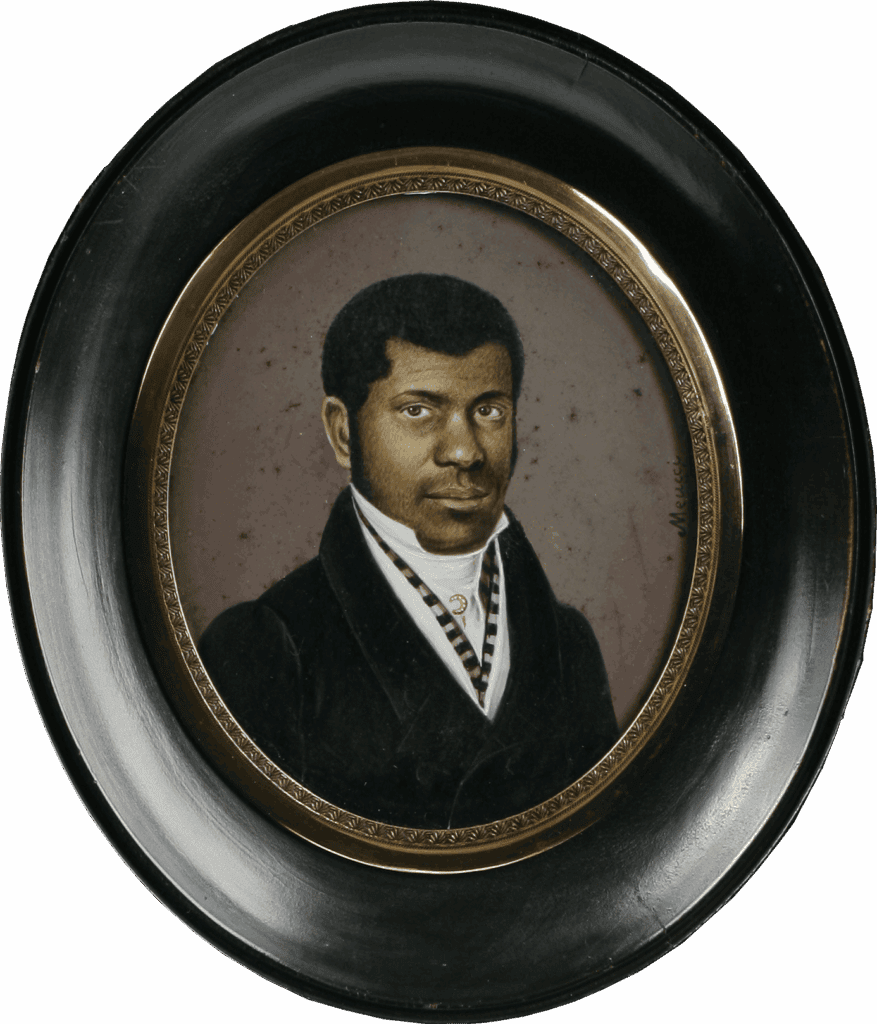
Hall was born and Christened Thomasine in Newcastle upon Tyne, England, around 1603, and raised as a girl until age 12, when an aunt in London took over Hall’s upbringing. At 22, when Hall’s brother was drafted into the English army, Hall cut off their hair, dressed as a man, and enlisted alongside him as Thomas, serving in the 1625 Cádiz expedition against Spain and later at the siege of Saint-Martin-de-Ré.
When the fighting ended, Hall went back to women’s clothes and made a living doing needlework and bone lace in Plymouth, England. Then, around 1627, Hall dressed as a man again, signed on as an indentured servant under the name Thomas, and sailed for the Virginia colony.
In Virginia, Hall moved between presenting as a man and a woman depending on the household and the work available. But the neighbors in the small settlement of Warrosquyoake noticed. When rumors spread that Hall had slept with a woman in the community, a group of women took it on themselves to physically examine Hall’s body without consent – more than once – trying to settle the question themselves. Their conclusions kept contradicting each other. The matter finally reached the General Court at Jamestown on April 8, 1629, under Governor John Pott. Asked directly whether Hall was a man or a woman, Hall answered plainly that they were both.
The court’s ruling was unlike anything else in the colonial record. Rather than force Hall into one category, the court declared Hall to be “a man and a woman.” They ordered the ruling published throughout the plantation so that, in the court’s words, all the inhabitants could take notice, and mandated that Hall dress in a permanent combination of men’s breeches with a woman’s coif, crosscloth, and apron layered over them. Hall was also required to post bond for continued good behavior.
After that court date, Hall vanishes from the historical record completely. Historians don’t know what happened next.
It’s tempting to read the ruling as pure punishment because in practice, it was: it stripped Hall of the ability to move through either identity unmarked, and made Hall a permanent public spectacle.
But it’s also, in its own strange colonial way, one of the earliest documented instances of a governing body in what’s now the United States legally acknowledging that a person could be both genders, rather than forcing a choice. That’s 147 years before the Declaration of Independence, and almost 400 years before most U.S. legislatures would still be arguing about the same basic premise.
Before Colonization, this Wasn’t a Fight
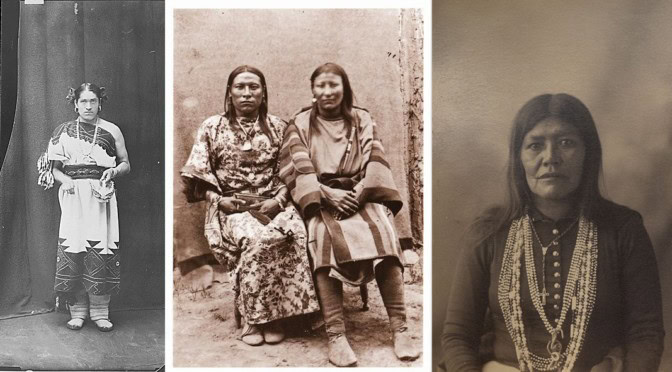
Here’s what gets lost if the story starts at Jemima Wilkinson’s sickbed: none of this began in 1776.
Long before European ships reached these shores, hundreds of Indigenous nations across the continent already recognized three, four, or more genders as an ordinary, unremarkable part of life. The Navajo have long honored Nádleehi. The Lakota have long honored Winkte. The Zuni have long honored Lhamana. These aren’t stand-ins for “transgender.” They’re distinct, sovereign traditions, each with its own language, meaning, and role, and every one of them predates the United States by centuries.
People holding these roles weren’t just tolerated at the margins of their communities. They were healers. They were mediators between families, clans, and the human and spirit worlds. They held ceremonial responsibilities that other community members simply didn’t. In many of these nations, gender expansiveness wasn’t a controversy to be managed. It was infrastructure. It was a necessary fabric of how the community functioned.
Then colonization arrived and gender diversity became a target. Missionaries preached it out of existence. Federal boarding schools cut children’s hair, renamed them, and beat the practice out of them for generations. Allotment policy and Christianization campaigns were written to erase multi-gender roles specifically, not as a side effect of conquest but as one of its stated goals. The suppression of Indigenous gender diversity wasn’t incidental to colonization. It was one of colonization’s tools.
Which means the story America usually tells itself, that gender nonconformity is a modern occurrence the country is still working out, is completely backwards. For thousands of years on this continent, this was never controversial. The controversy is the import. It arrived with the colonizers, and it’s never fully left.
Then and Now
It’s worth noting the changes, and the lack of it, between these stories and this year.
The Public Universal Friend lost their Quaker meeting and their birth family’s public support for refusing a gendered name. In 2026, legislatures are trying to write that same refusal out of the law entirely. Our Trans Legislation Tracker is currently tracking 804 anti-trans bills under consideration across 43 states and at the federal level this year, with education and healthcare bills making up about half of the total.
Deborah Sampson had to hide a war wound rather than risk a doctor discovering who she was, then spent over a decade petitioning a government that didn’t want to pay her for service it had already accepted. In 2026, a wave of state bills is moving away from explicit bans toward broader “sex definition” laws that redefine sex across entire legal codes in ways that exclude transgender and nonbinary people from legal recognition altogether, a more sweeping version of the same old refusal to recognize who someone actually is.
Thomas/Thomasine Hall was forced by a colonial court to wear a permanent, state-mandated marker of difference, a punishment dressed up as an accommodation. Some of 2026’s bills follow a near-identical logic: Kansas passed a law this year combining a bathroom ban with new restrictions on transgender people’s ability to update gender markers on their own identity documents, once again making the state the final word on how a person’s body and paperwork are allowed to match.
The specifics change. Breeches and crosscloths become bathroom bills and birth certificate restrictions. But the underlying instinct, the need for the state to legislate a body into a fixed, legible category, is the same instinct it’s always been.
What’s different now is that we have centuries of ancestors who refused it first, and won more often than history gives them credit for.